StreamerIn design
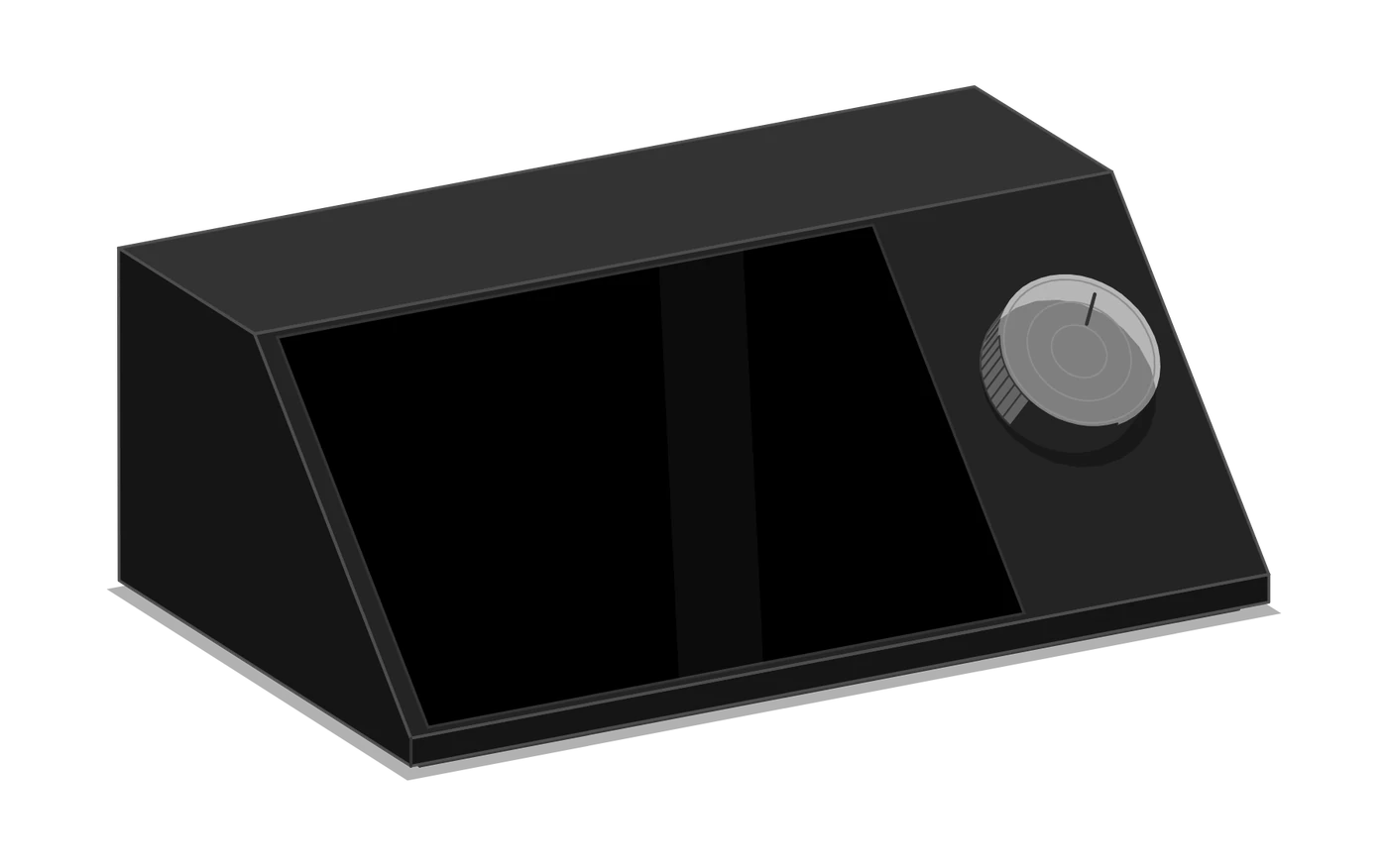
otoka s1. One block. One knob. Nothing left out.
StreamerIn design
The s1 is the one player we make, so every part of it answers one question: what reaches the DAC, and when.
Jitter is a timing error, and it grows with every metre and every gate between clock and converter. Two femto-class oscillators, one per sample-rate family, sit right at the DAC, and the signal is clocked again after the digital isolator that separates audio from computer.
What switches couples into what it sits next to, through the air and through the ground. The DAC, its clocks and the output stages live in their own chamber, apart from the computer side.
The ESS ES9039PRO has eight; the s1 uses all of them, four per stereo channel, fully differential to the XLR outputs. Their noise does not add up the way the music does, so the floor drops.
No Wi-Fi, no Bluetooth next to the DAC.
Every file reaches the DAC unaltered at its own rate, PCM up to 384 kHz and 32 bit, native DSD up to DSD512, and the s1 shows it.
It learns how every track sounds. Sounds like, play on and search by sound, on the display, in the app and in any browser. No audio leaves the s1.
The s1 holds the library on your own drive, outside or on its M.2 slot inside, reads the tags, finds the covers and plays. No cloud, no account, no subscription, and no computer has to stay on.
Its display and knob, the otoka app, any browser, Home Assistant.
With the otoka h1 it is one system, and a b1 holds the library that outgrows the s1.
An optional addition, for a library that outgrows the drives on the s1.
| Analog out | XLR 4 Vrms, RCA 2 Vrms, each with its own output stage and a relay against clicks |
|---|---|
| Digital out | coaxial and AES3, both with transformers |
| Digital in | USB-C DAC input for a computer, coaxial, optical |
| Analog in | XLR/TRS line input, RCA line input |
| Network | 2× Gigabit Ethernet, SFP for fiber |
| USB | 2× USB-C host, 1× USB-A for drives and sticks |
| Storage | M.2 NVMe slot: the library can live inside |
| Trigger | 12 V trigger output for power amplifiers and active speakers |
| Size | 265 × 165 × 96 mm, on a dark shadow-gap foot |
Every s1 will be built to order, in the black series. Put your name on the waiting list and we write to you when it is ready to order, with the price and the lead time. Or tell us about the room, your speakers and how you listen, and we answer in person.